How to Plan the Best Motorcycle Trip
A great motorcycle trip is not just a route on a map. It is the combination of the motorcycle, the rider, the road, the weather, the luggage, the fuel stops and the decisions you make when things do not go exactly as planned. That is what makes motorcycle travel different from a car trip. You feel the road more, but you also feel every planning mistake more.
The best motorcycle trips usually have a simple quality: they are realistic. The rider has enough time, the bike is prepared, the route has room for changes, and the day does not depend on everything going perfectly. This guide focuses on the whole trip, not only the route. If you want route-specific advice, you can also compare bikes and touring options through the MotoLibrary motorcycle specs database and motorcycle comparison tool.
Decide What Kind of Trip You Want
Before choosing hotels, roads or mileage, decide what the trip is supposed to feel like. Is it a relaxed weekend ride? A long-distance tour? A camping trip? A scenic backroad loop? A first overnight ride? Each kind of trip needs different planning.
A common mistake is planning a ride that sounds impressive but does not match your real energy level. A trip does not need to be extreme to be memorable. Sometimes the best motorcycle trip is a shorter route with better roads, better stops and less pressure.
Motorcycle Trip Planning Overview
| Planning Area | What to Decide | Why It Matters |
|---|---|---|
| Daily distance | How far you can ride without rushing. | Fatigue ruins judgment and enjoyment. |
| Fuel range | Where you will refuel and what backups exist. | Remote roads punish poor fuel planning. |
| Lodging | Hotel, camping, or flexible stops. | End-of-day stress is easier to avoid than fix. |
| Weather | Heat, rain, wind, cold and daylight. | Motorcycle comfort changes quickly. |
| Bike condition | Tires, brakes, chain, battery, lights. | Small issues become big problems far from home. |
Plan Distance by Hours, Not Only Miles
Many riders plan by mileage and forget time. One hundred miles of open highway is not the same as one hundred miles of mountain roads, small towns, fuel stops and construction. A realistic trip plan looks at hours in the saddle, not just total distance.
If you are new to motorcycle travel, start conservative. Leave room for food, photos, fuel, weather changes and simple rest. The best touring riders are not always the riders who cover the most miles. They are the ones who finish the day still sharp.
Pack Less Than You Think
Overpacking is one of the easiest ways to make a trip worse. Extra weight changes how the bike feels, makes stops more annoying and creates more things to manage. Pack what you need, not what your anxious brain invents at midnight before the trip.
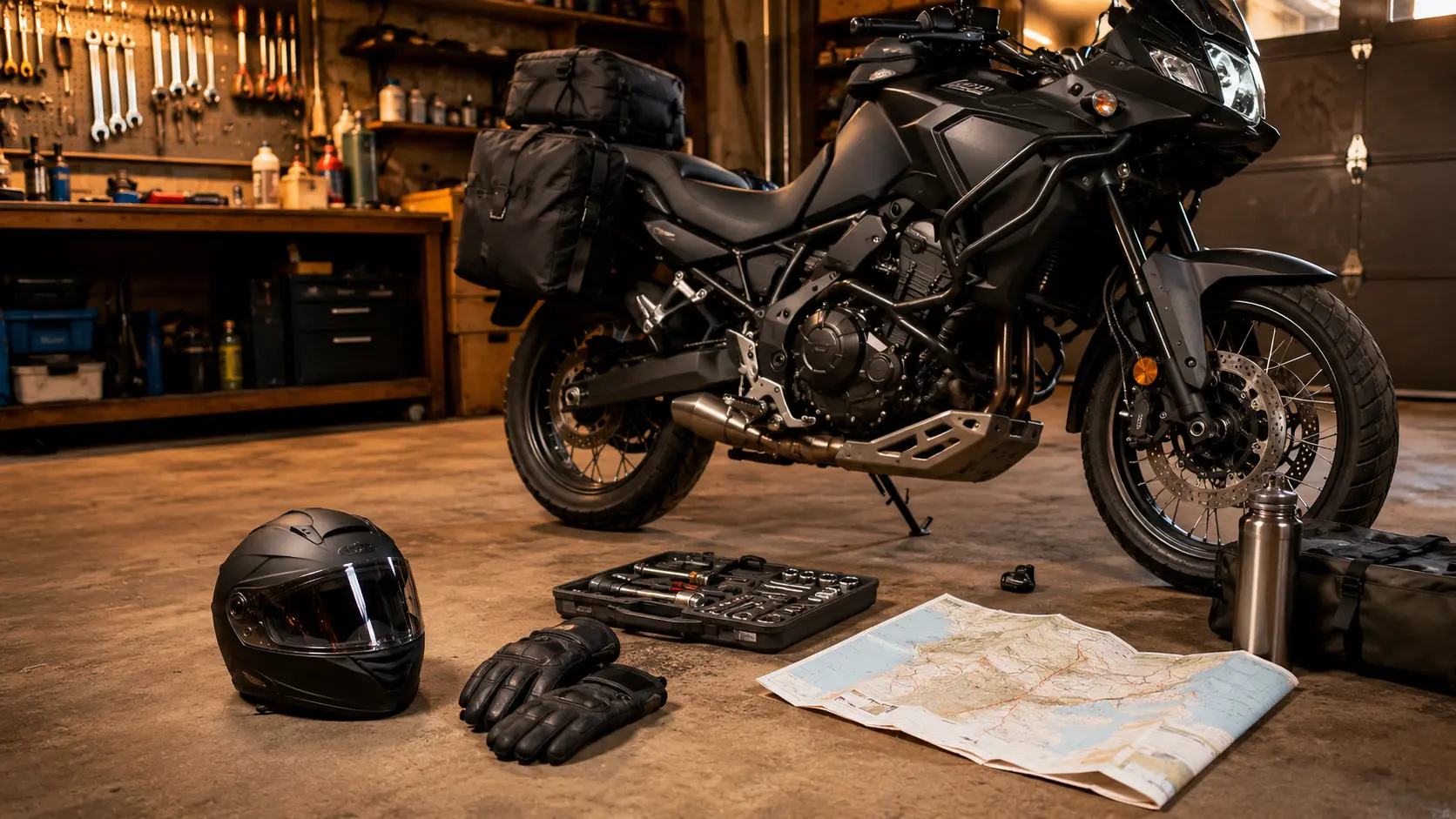
- Rain layer or waterproof suit
- Warm layer, even in mild weather
- Basic tools and tire repair option
- Phone charger and power bank
- Water and small snacks
- Documents, insurance and emergency contact
- Visor cleaner or microfiber cloth
- Small first-aid kit
Prepare the Bike Like You Are Leaving Town
Do not use a long trip as a test for a motorcycle you have not checked. Look at tires, pressure, tread depth, brake pads, brake fluid, chain or belt, oil level, coolant if applicable, battery health, lights and luggage mounts. If a tire is almost done, replace it before the trip.
Also take a short loaded test ride before leaving. Luggage can change balance and wind behavior. A bag that seems secure in the garage may shift on the road.
Fuel Stops Are Part of the Route
Know your real fuel range. Do not rely only on the manufacturer’s number or what someone online claimed. Speed, wind, hills, luggage and riding style all affect range. On remote roads, plan fuel earlier than necessary.
If your motorcycle has a small tank, mark backup stations. If you are riding in rural areas, do not assume every small station has fuel or is open late.
Weather Planning Should Be Active
Check weather before the trip, the night before each ride and during the day if conditions change. Rain is not the only issue. Heat can drain concentration. Cold can stiffen your hands. Wind can make a short ride feel long.
Put rain gear where you can reach it. If you have to unpack the whole bike on the roadside while rain starts, you packed wrong.
Hotels, Camping and End-of-Day Decisions
Some riders like booking every night in advance. Others like flexibility. Both can work. If you are traveling during a busy season or to popular areas, booking ahead can reduce stress. If your route depends on weather or mood, flexible lodging may be better.
The important thing is not to ride tired just because the hotel is still far away. If the day is going badly, stop earlier. A safe evening is better than forcing the plan.
Emergency Planning Without Overthinking
You do not need to plan for every disaster, but you should be ready for common problems. Keep your phone charged. Share your route with someone. Carry insurance information. Know how roadside assistance works for your motorcycle. Have enough water. Know what you will do if the bike will not start.
Good preparation does not make a trip less adventurous. It gives you more freedom because small problems do not become trip-ending drama.
Riding With Friends
Group trips need clear expectations. Agree on pace, fuel stops, lunch stops, passing rules and what happens if someone gets separated. The group should not ride at the pace of the fastest rider. It should ride at a pace that keeps everyone comfortable.
Do not be embarrassed to say you need a break. Fatigue does not care about ego.
Common Motorcycle Trip Mistakes
The most common mistakes are too many miles, too much luggage, not enough water, poor weather planning, weak tire inspection and pretending fatigue is not happening. Riders also sometimes plan a trip around a destination and forget that the ride itself should be enjoyable.
If the plan becomes stressful before you even leave, simplify it. A shorter trip done well is better than a long trip you only survive.
FAQ
How many miles should I plan per day?
It depends on roads, weather and experience. New touring riders should start with conservative mileage and build up later.
Should I book hotels in advance?
For busy areas or limited lodging, yes. For flexible trips, you can leave some nights open, but avoid riding exhausted while searching.
What should I check on the motorcycle before a trip?
Check tires, brakes, chain or belt, fluids, battery, lights and luggage mounts.
Is camping on a motorcycle trip worth it?
It can be, but it adds gear and weight. Keep the setup simple if you are new to motorcycle camping.
Where can I compare touring-friendly motorcycles?
Use the MotoLibrary specs database and comparison tool.
Final Take
The best motorcycle trip is planned enough to be safe but flexible enough to stay fun. Keep the route realistic, pack light, prepare the bike and respect fatigue. A motorcycle trip should not feel like a test you barely pass. It should feel like a ride you want to remember.