Types of Motorcycle Alarm Systems and How to Choose One
Motorcycle security is not about one perfect device. It is about making your bike harder, louder and riskier to steal than the next one. A motorcycle alarm can help, but only if you choose the right type and use it as part of a layered security plan. A cheap alarm thrown under the seat and forgotten is not much protection.
The right alarm system depends on where you park, how often you ride, whether the bike sleeps outside, how theft-prone your area is and how much inconvenience you are willing to tolerate. This guide explains the main types of motorcycle alarm systems and how riders should think about them in real life.
Start With the Goal
Some security devices try to scare thieves away. Some try to slow them down. Some help you find the bike after it moves. These are different jobs. A siren may get attention, but it will not track the motorcycle. A GPS tracker may help recovery, but it may not stop someone from loading the bike into a van.
That is why layered security works best. A lock, alarm, tracker, cover and smart parking habit all do different things. Together they make theft more difficult.
Motorcycle Alarm Types Compared
| Alarm Type | Best For | Weak Point |
|---|---|---|
| Disc lock alarm | Simple parking security and visible deterrence. | Can be forgotten before riding away. |
| Hardwired alarm | Integrated siren, tilt and ignition protection. | Needs proper installation. |
| GPS tracker | Movement alerts and recovery support. | May require subscription and signal coverage. |
| Immobilizer | Preventing easy ride-away theft. | Does not stop lifting or towing. |
| Chain and lock | Physically slowing theft. | Heavy and less convenient. |
Disc Lock Alarms
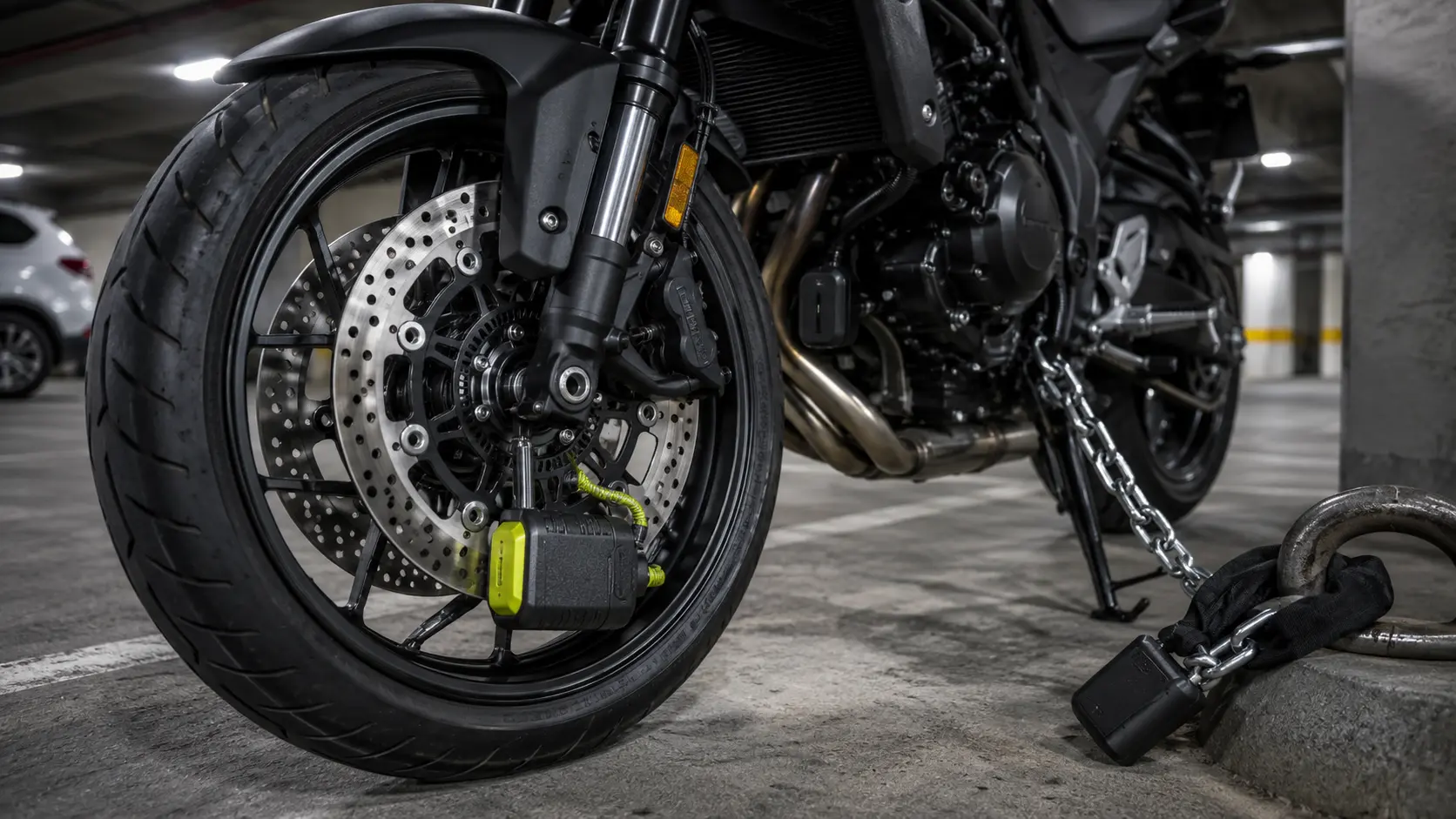
A disc lock alarm attaches to the brake disc and sounds if the motorcycle is moved. It is one of the easiest security upgrades because it does not require wiring. Many riders like it for commuting, apartment parking or quick stops.
The downside is that it protects only as well as you use it. Forgetting it is a common problem. A reminder cable helps prevent riding away with the lock still attached. Also remember that a disc lock does not anchor the motorcycle to the ground. A determined thief can still lift the bike.
Hardwired Alarm Systems
A hardwired alarm can include a siren, tilt sensor, shock sensor and sometimes ignition interruption. These systems feel more integrated than portable locks, but installation matters. Poor wiring can cause battery drain, false alarms or electrical problems.
If you choose a hardwired alarm, use a quality system and install it carefully. If you are not comfortable with motorcycle wiring, pay someone who is. Bad security wiring can become its own maintenance issue.
GPS Trackers
A GPS tracker is not always an alarm in the traditional sense, but many modern trackers send motion alerts or geofence alerts. This can be extremely useful if the motorcycle is moved while parked. Some trackers are battery-powered, while others are hardwired with backup batteries.
Trackers are strongest after movement begins. They are not always good at stopping theft before it starts. They work best with a lock or alarm that slows the thief down while the tracker alerts you.
Immobilizers
An immobilizer helps prevent the motorcycle from being started or ridden away without the proper key or signal. Many modern motorcycles already have some form of immobilizer. This can reduce casual theft, but it does not stop someone from loading the motorcycle into a truck.
Think of an immobilizer as one layer. Useful, but incomplete.
Tilt, Shock and Motion Sensors
Many alarms use tilt or shock sensors. A tilt sensor can detect the bike being lifted off the side stand. A shock sensor can detect impact or tampering. A motion sensor can detect movement. Sensitivity matters. Too sensitive and the alarm becomes annoying. Not sensitive enough and it may not react soon enough.
False alarms are a real problem. If your alarm screams every time wind moves the cover, people will ignore it or you will stop using it. A good system lets you adjust sensitivity.
Sirens and Remote Alerts
A loud siren can draw attention, but not every parking area has people who will care. Remote alerts are more useful because they tell you directly when something happens. App notifications, key fob alerts or SMS alerts can make a big difference if you are close enough to react.
Still, alerts depend on battery, signal and setup. Test your system before trusting it.
Parking Habits Matter More Than Riders Admit
Even the best alarm is weaker if the bike is parked in a hidden place every night. Choose visible, well-lit areas when possible. Use a cover to reduce attention. Lock the motorcycle to something solid if you can. Avoid predictable long-term parking in exposed locations.
Apartment riders and city commuters should take security especially seriously because the bike may be watched over time.
A Layered Security Setup That Makes Sense
For many riders, a good setup is simple: a disc lock alarm for noise, a chain or ground anchor when parked at home, and a GPS tracker for movement alerts. Add a cover if the bike is outside. This combination slows theft, creates attention and gives you a better chance of knowing when the bike moves.
If the motorcycle is expensive, rare or parked in a high-risk area, spend more on security. It is cheaper than replacing the bike.
Common Alarm Mistakes
- Buying the cheapest alarm and never testing it.
- Installing wiring poorly and creating battery drain.
- Forgetting a disc lock before riding away.
- Letting tracker subscriptions expire.
- Hiding a tracker where it has poor signal.
- Relying on one device instead of using layers.
- Parking in the same exposed place every day.
Choosing the Right Alarm for Your Situation
If you park in a garage, a chain and ground anchor may matter more than a loud siren. If you commute and park outside, a disc lock alarm and tracker may be more useful. If you travel, portability matters. If you own a high-value motorcycle, layered security is worth the inconvenience.
If you are comparing motorcycles and thinking about theft risk or ownership cost, browse the MotoLibrary motorcycle specs database and compare options with the motorcycle comparison tool. Some bikes are simply more attractive to thieves than others.
FAQ
Do motorcycle alarms really stop theft?
They can discourage some thieves, but no alarm is perfect. They work best with locks, trackers and smart parking.
Is a disc lock alarm worth it?
Yes, for many riders. It is simple, portable and adds noise, but it should not be the only security layer.
Is a GPS tracker better than an alarm?
It does a different job. A tracker helps with alerts and recovery, while an alarm tries to deter theft.
Will an alarm drain my battery?
It can if poorly installed or if the bike sits too long. Quality installation and battery maintenance matter.
What is the best motorcycle security setup?
A layered setup: physical lock, alarm, tracker, cover and smart parking habits.
Final Take
The best motorcycle alarm system is the one you will actually use every day. A complicated system you ignore is worse than a simple setup used consistently. Think in layers: make the bike hard to move, loud to touch and easier to track if it disappears. That is how motorcycle security becomes practical instead of just another gadget.