What Motorcycle Should I Get?
Choosing the Perfect Motorcycle for You
The right first motorcycle fits your body, matches the riding you actually plan to do, and leaves room in your budget for training, protective gear, insurance, and maintenance. For beginners, manageable weight and power matter more than impressive specifications. This motorcycle buying guide helps you narrow the choices, compare realistic options, and prepare for ownership without buying more bike than you can comfortably handle. (dol.wa.gov)
What motorcycle should I get?
Choose a motorcycle suited to your current skills, physical fit, everyday routes, and total ownership budget—not the rider you hope to become. A smaller, lighter motorcycle is generally easier for a novice to maneuver, making it a sensible starting point while you develop control and confidence. Your first bike does not need to be your forever bike. (dol.wa.gov)
Before browsing listings, write down your priorities: your usual journey, expected road speeds, parking arrangements, and available spending money. Separate genuine needs from occasional ambitions. A daily commute deserves more influence than a cross-country trip you might take someday.
Match the motorcycle type to your riding
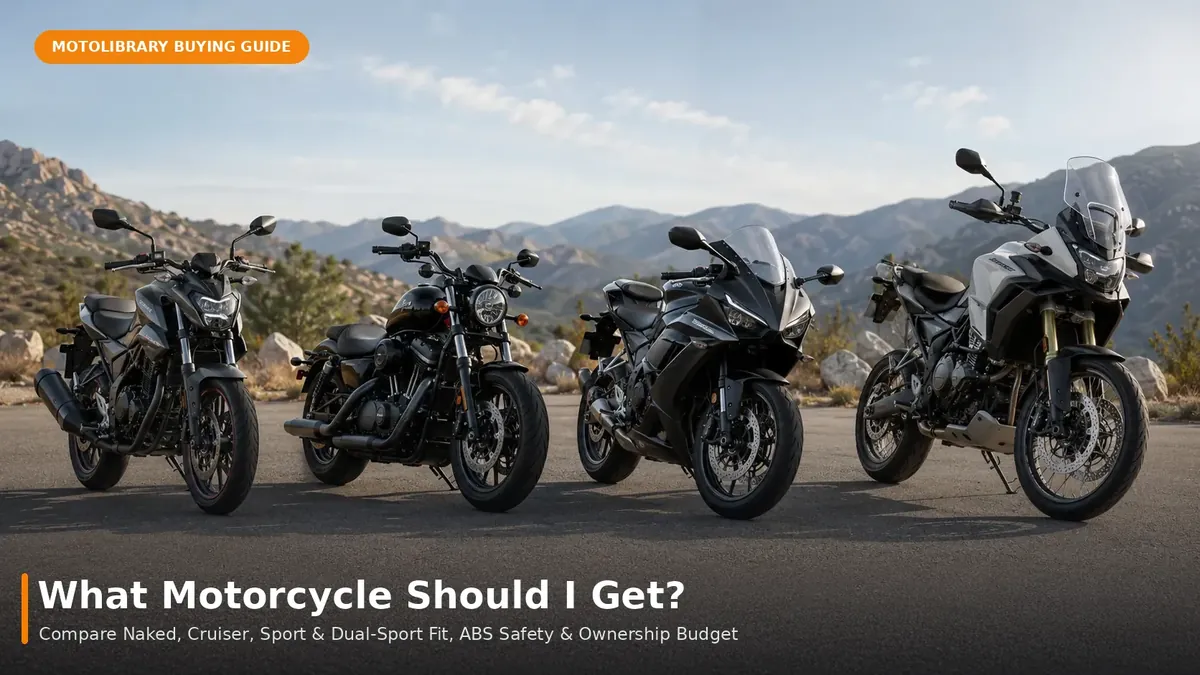
If you are asking, “What type of motorcycle should I get?”, start with where you will ride most often. Categories help narrow your search, but choose a beginner-appropriate version rather than assuming every motorcycle within a category will suit you. (americanmotorcyclist.com)
- Standard or naked: Worth trying for mixed everyday riding. Compare riding positions and control reach rather than choosing by appearance alone.
- Cruiser: Consider one if you prefer its seating position and styling. Check weight carefully; a low seat does not automatically make a motorcycle easy to manage.
- Sport: Distinguish approachable street models from high-performance machines intended for experienced riders.
- Dual-sport: Designed for pavement and off-highway use, often with tall seating and extra ground clearance.
- Touring: Consider your luggage and distance needs, but do not overlook the challenge of managing a larger motorcycle as a beginner. (dol.wa.gov)
“What kind of motorcycle should I get?” becomes easier to answer once you picture an ordinary week. Choose for that week first, then consider the exceptions.
Make physical fit a deciding factor
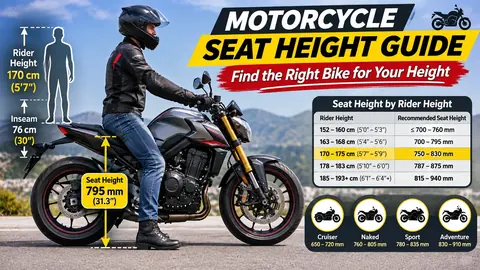
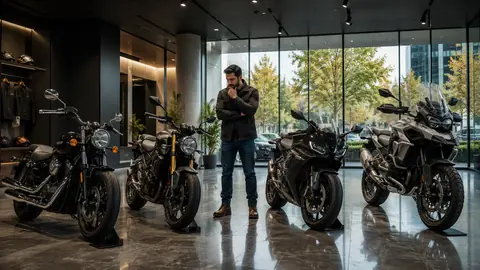
Sit on several motorcycles before committing. You should comfortably reach and operate the controls without stretching, and the riding position should not feel cramped. Check whether you can turn the handlebars easily and whether the motorcycle feels too heavy to manage. (americanmotorcyclist.com)
Use this showroom checklist:
- Ground reach: Your feet should reach the ground securely while seated. Being able to place both feet flat can be reassuring when learning.
- Upper body: Reach the grips with a slight bend in your arms, rather than locked elbows.
- Lower body: Make sure your knees and feet sit comfortably and you can operate the pedals.
- Overall control: Ask a staff member to help you assess the motorcycle upright before attempting to move it yourself. (powersports.honda.com)
Not sure what seat height matches your height and inseam? Read our Motorcycle Seat Height Chart by Rider Height & Complete Fit Guide to see exact seat height ranges (in inches and mm), how seat width and bike weight affect ground reach, and how to test-sit a bike before buying.

Favor manageable performance and useful safety features
Avoid choosing by engine size alone. Compare weight, power, riding position, and your ability to operate the motorcycle comfortably. The American Motorcyclist Association recommends that beginners consider smaller engines with manageable power while learning the basics. (americanmotorcyclist.com)
Put antilock brakes high on your shortlist. ABS helps prevent wheel lock during hard braking; an IIHS study comparing motorcycles with and without optional ABS found lower fatal-crash involvement rates for the equipped versions. Confirm that the exact motorcycle you are considering has ABS, rather than assuming every version does. (iihs.org)
Safety equipment supports skill, not replaces it. Pair your purchase with formal instruction and continued practice rather than treating technology as permission to ride beyond your ability. MSF recommends beginner training before entering traffic. (msf-usa.org)
Build a shortlist of beginner-friendly models
The best beginner bikes are candidates to try, not universal winners. These examples offer different starting points; compare the exact model year, condition, equipment, and fit before deciding. Honda identifies the following models as options for newer riders. (powersports.honda.com)
| Motorcycle | Why consider it | What to check |
|---|---|---|
| Honda Rebel 300 | Low-seat cruiser with approachable power delivery | Whether its riding position suits your reach and legs |
| Honda CB300R | Naked-bike styling with accessible performance | Comfort, control reach, and equipment on the example offered |
| Honda CRF300L | Dual-sport option for paved and unpaved riding | Whether its height feels manageable at stops |
Treat this as a comparison exercise, not a shopping order. Sit on alternatives in the same categories, and ask your instructor which characteristics deserve attention after seeing you ride. Manufacturer descriptions can explain features, but they cannot establish personal fit. (powersports.honda.com)
Budget for ownership, not just the purchase
Set your spending ceiling before negotiating. Ask for a written purchase total and build a separate allowance for everything needed to start riding. Avoid spending your entire budget on the motorcycle and hoping the remaining costs will work themselves out.
Include these items in your worksheet:
- Getting started: Training, licensing, registration, and any applicable purchase charges.
- Protective equipment: Helmet, gloves, riding clothing, boots, and eye protection.
- Ongoing ownership: Insurance, fuel, scheduled servicing, tires, and secure storage.
- A repair reserve: Especially important when a used motorcycle’s service needs are uncertain.
New motorcycles can offer warranty coverage and financing options. Used motorcycles deserve closer attention to condition and maintenance history; compare the purchase price alongside any work needed immediately. For either option, request the owner’s manual and service schedule so your budget reflects the actual motorcycle. (powersports.honda.com)
For a used purchase, arrange an independent inspection by a qualified motorcycle mechanic. Ask specifically about tires, brakes, leaks, controls, lights, and chassis condition—the same broad areas emphasized in MSF’s inspection guidance. Do not let cosmetic appeal distract you from mechanical condition. (msf-usa.org)
What motorcycle insurance coverage should I get?
Choose coverage that meets your state’s requirements and addresses the losses you could not comfortably pay yourself. Liability, damage to your motorcycle, and injuries to you are different concerns; one coverage does not automatically handle all three. Review the policy details with a licensed insurance professional before buying. (insurance.maryland.gov)
When asking, “What type of motorcycle insurance should I get?”, use these distinctions:
- Liability: Pays for covered injuries or property damage you cause to others. It does not cover your own motorcycle damage or injuries.
- Collision: Helps pay for damage to your motorcycle from a collision, subject to the policy and deductible.
- Comprehensive: Addresses covered non-collision losses, such as theft or fire.
- Uninsured/underinsured motorist: Can provide protection when an at-fault driver lacks sufficient insurance.
- Medical payments: Where available, can help with covered injury expenses regardless of fault. Ask how it applies to you and passengers. (doi.nv.gov)
Get quotes for your shortlisted motorcycles before paying a deposit. Compare equivalent limits and deductibles, ask about exclusions, and check whether a lender requires collision and comprehensive coverage. Ask separately about accessories, riding gear, and passenger protection rather than assuming they are included. (insurance.maryland.gov)
Complete the essentials before your first ride
Take a recognized beginner course before buying if possible. MSF courses teach basic skills and can help you work toward licensing; whether course completion substitutes for a licensing test depends on your state. Check requirements directly with your state licensing agency. (msf-usa.org)
Choose a properly fitting, DOT-compliant helmet, plus protective clothing, gloves, eye protection, and over-the-ankle footwear. Try the gear on rather than buying by size labels alone. NHTSA emphasizes helmet fit and protective equipment as essential preparation for riding. (nhtsa.gov)
Only arrange a test ride when properly licensed, insured, equipped, and permitted by the seller. If that is not possible, prioritize a careful fit assessment and professional inspection. Before taking ownership, read the manual and learn the pre-ride checks rather than discovering unfamiliar controls in traffic. (nhtsa.gov)
Choose confidence over bragging rights
The right motorcycle makes sense for your skills, body, routes, and finances. Shortlist a few candidates, compare ownership costs, and refuse to rush a purchase that feels uncomfortable. Start with a bike you can learn on confidently; there will be time to decide what comes next.
Still Asking “What Motorcycle Should I Get?” Try Our Bike Finder
Enter your height (cm or feet & inches), optional inseam, weight, experience level, and riding style in our Motorcycle Finder to get a personalized Top 10 shortlist matched to your ground reach, wet weight manageability, and power-to-weight ratio.
Want to learn how rider height, inseam, seat width, and bike weight work together? Check our Motorcycle Seat Height Chart by Rider Height & Complete Fit Guide.
Every guide and technical review on MotoLibrary is cross-checked against manufacturer OEM workshop manuals, type-approval records, and our database of 38,500+ motorcycles. Found an outdated specification or want to suggest an update?