How to Wash Your Motorcycle the Right Way
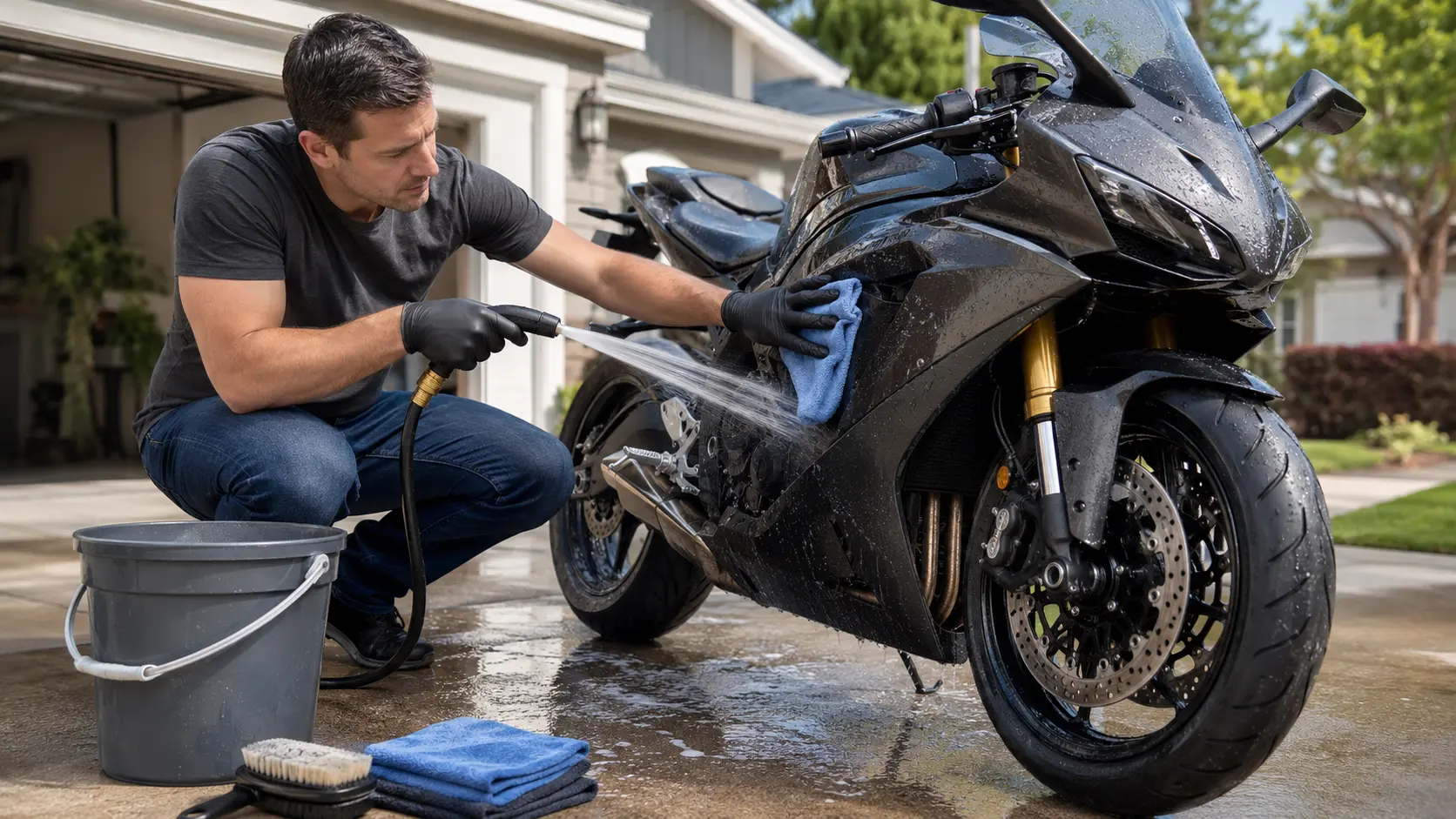
Washing a motorcycle is not just about making it look good. It is also a chance to inspect the machine. When you clean the wheels, you may notice tire wear. When you wipe the forks, you may notice a leak. When you clean around the chain, you may notice tight spots or rust. A good wash is part cleaning, part maintenance check.
The wrong wash can cause problems. High-pressure water, harsh chemicals, greasy tire shine and careless spraying around electronics can do more harm than good. The right approach is slower, gentler and more deliberate than washing a car.
Let the Motorcycle Cool Down
Do not spray cold water onto a hot engine, exhaust or brake components. Let the motorcycle cool in the shade before washing. Hot metal can make cleaners dry too quickly and leave stains. Sudden temperature changes are also not ideal for some parts.
A cool motorcycle is easier to clean properly because soap and water stay workable longer.
Motorcycle Washing Setup
| Item | Use | Important Note |
|---|---|---|
| Motorcycle-safe soap | Paint, plastics and general cleaning. | Avoid harsh household cleaners. |
| Microfiber towels | Washing and drying delicate surfaces. | Use separate towels for dirty areas. |
| Soft brushes | Wheels, chain area and tight spaces. | Do not use a dirty brush on paint. |
| Chain cleaner | Chain grime and old lubricant. | Keep it off tires and brakes. |
| Low-pressure water | Gentle rinse. | Avoid forcing water into seals and connectors. |
Avoid High-Pressure Water
Pressure washers are risky around motorcycles. They can force water into bearings, switches, seals, connectors and chain areas. If you use one, keep distance and avoid sensitive parts. For most riders, a normal hose with gentle flow is safer.
Do not aim strong water at wheel bearings, steering head bearings, suspension seals, electrical connectors, air intake, exhaust openings or instrument areas.
Start With a Gentle Rinse
Rinse loose dirt before touching the paint. Dragging dry grit across bodywork can scratch it. Work from the top down. Let water soften bug splatter and road grime before wiping.
If the motorcycle is very dirty, take your time. Rushing is how scratches happen.
Use Separate Towels and Brushes
Wheel grime, brake dust and chain dirt should not touch your tank or fairings. Use separate towels or brushes for dirty areas. This one habit prevents many cleaning scratches.
Microfiber towels are useful, but they must be clean. A dropped towel can pick up grit. Once it hits the ground, do not use it on paint.
Cleaning the Chain Area
If your motorcycle has a chain, clean it carefully with the right product. Do not use random harsh solvents unless they are safe for motorcycle chains and O-rings. Use a chain brush gently and rotate the wheel carefully by hand.
After washing, dry the chain and lubricate it if needed. Do not spray chain lube onto the tire or brake disc. Wipe excess lubricant so it does not fling everywhere on the next ride.
Wheels, Brakes and Tires
Wheels get dirty quickly, but be careful around brakes. Do not use greasy products near brake discs. Do not apply tire shine to motorcycle tires. A shiny tire may look good in photos, but slippery tire sidewalls or tread contamination are not worth it.
After washing, test the brakes gently at low speed. Wet brakes can feel different for the first few stops.
Drying Is Not Optional
Drying prevents water spots and helps reduce corrosion in small areas. Use clean microfiber towels or gentle air. Pay attention to mirrors, controls, fasteners, the chain area, seat edges and places where water sits.
A short careful ride after washing can help dry brakes and hidden areas, but do it gently and only after you know the controls feel normal.
Detailing Without Overdoing It
Detailing products can protect paint and make the bike easier to clean next time, but avoid slippery products on the seat, grips, pegs and tires. Anything that affects rider contact points can become a safety issue.
Use products made for the material you are treating: painted surfaces, matte finishes, chrome, plastic, rubber and leather may need different care.
Use the Wash as an Inspection
While cleaning, look for loose bolts, leaking fork seals, worn tires, damaged brake lines, cracked rubber, chain wear, missing fasteners and fluid leaks. A wash is one of the easiest times to notice small problems.
If repeated maintenance issues make you question whether a bike is worth keeping, compare similar models in the MotoLibrary specs database or use the comparison tool.
Common Motorcycle Washing Mistakes
- Washing a hot motorcycle in direct sun.
- Using dish soap or harsh household cleaners.
- Pressure washing seals and electronics.
- Using one dirty sponge on the whole bike.
- Putting tire shine on motorcycle tires.
- Forgetting to lubricate the chain after cleaning.
- Leaving water sitting in hidden areas.
A Simple Safe Wash Routine
Cool the bike. Rinse gently. Wash top-down with motorcycle-safe soap. Clean wheels and chain with separate tools. Rinse carefully. Dry thoroughly. Lubricate the chain if needed. Check brakes and controls before riding normally.
That routine is not complicated, but it protects the motorcycle better than a rushed spray-and-wipe job.
FAQ
Can I pressure wash my motorcycle?
It is safer to avoid high pressure. If used, keep distance and avoid bearings, electronics, seals, chain, brakes and controls.
Can I use dish soap?
Motorcycle-safe soap is better. Harsh cleaners can strip protection or dry out materials.
Should I lube the chain after washing?
Yes, if the chain was cleaned or exposed to water. Dry it first and avoid overspray on tires or brakes.
Can I use tire shine?
No. Avoid slippery products on motorcycle tires, seats, grips and pegs.
How often should I wash my motorcycle?
Wash it when dirt, salt, bugs or grime build up. The best schedule depends on weather, storage and riding conditions.
Final Take
The best way to wash a motorcycle is carefully, not aggressively. Use gentle water, safe cleaners and clean towels. Protect the chain, brakes, electronics and contact points. Most importantly, use the wash as a chance to inspect the bike. A clean motorcycle is nice; a clean motorcycle that is also checked and ready to ride is better.