How to Charge a Motorcycle Battery Properly
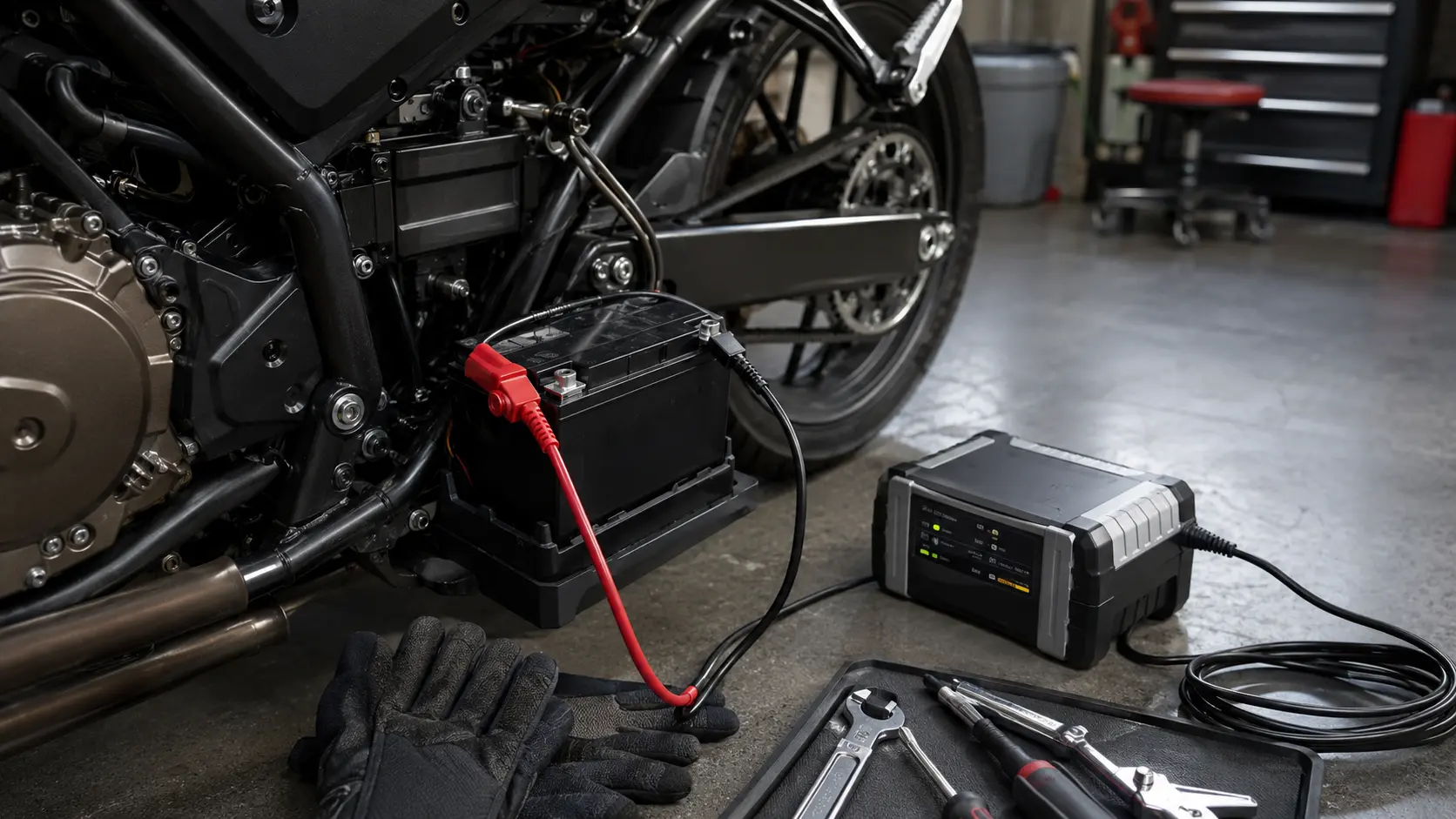
A dead motorcycle battery is one of those problems that feels small until it ruins your ride. You put on your gear, roll the bike out, press the starter, and instead of hearing the engine come alive you get a weak click or a tired crank. Most riders deal with this sooner or later, especially if the motorcycle sits for weeks, lives in cold weather, or only gets used for short trips.
Charging a motorcycle battery is not complicated, but it does need to be done correctly. A motorcycle battery is smaller than a car battery, and using the wrong charger or the wrong charging mode can shorten its life. This guide explains how to charge it safely, how to choose a charger, when to use a battery tender, and how to tell whether the battery is actually bad instead of just low.
Before You Connect Anything
Start by looking at the battery and the motorcycle. If the battery case is swollen, cracked, leaking, hot, or smells strange, do not try to charge it. Replace it. Charging a damaged battery can be dangerous. If the terminals are badly corroded, clean them carefully before charging because poor contact can make the charger behave incorrectly.
Also check what type of battery you have. Many motorcycles use AGM batteries. Some use conventional lead-acid, gel, or lithium batteries. The charging method is not always the same. A charger that is fine for a lead-acid battery may not be right for a lithium battery unless it has the correct mode.
Battery Type and Charger Match
| Battery Type | Charging Note | What to Avoid |
|---|---|---|
| AGM | Use a smart charger with AGM support. | Do not use a high-amp car charger. |
| Conventional lead-acid | Can be charged with a compatible low-amp charger. | Avoid sparks, poor ventilation, and overcharging. |
| Gel | Needs the correct voltage profile. | Do not guess if the charger lacks a gel mode. |
| Lithium | Use a lithium-compatible charger. | Do not use a lead-acid charger unless approved. |
Use a Motorcycle Charger, Not Just Any Charger
The safest choice is a smart motorcycle charger or battery tender. These chargers are made for smaller batteries and can reduce output when the battery reaches the correct level. A big automotive charger may push too much current, especially if it does not have a low-amp motorcycle setting.
For most riders, a charger in the 0.75 amp to 2 amp range is enough for maintenance and normal charging. Fast charging sounds convenient, but slow and controlled charging is usually better for battery life. If you ride occasionally, a battery tender is often more useful than a powerful charger.
Charging the Battery While It Is on the Bike
Many riders charge the battery while it is still installed. That is normal if the battery is healthy and the charger is designed for it. A quick-connect tender lead makes this easy. You plug in the charger without removing the seat or side cover every time.
Still, be sensible. Keep the charger away from water. Make sure the leads cannot touch hot exhaust parts or moving components. If you are charging in a garage, do it in a ventilated area. If the motorcycle has sensitive electronics, follow the owner’s manual for battery charging recommendations.
Basic Charging Steps
- Turn the motorcycle off and remove the key.
- Check the battery type and charger setting.
- Connect the positive lead to the positive terminal.
- Connect the negative lead to the negative terminal or recommended ground point.
- Plug in the charger after the leads are connected.
- Let the charger complete its cycle.
- Unplug the charger first, then remove the leads.
- Start the motorcycle and confirm it cranks normally.
Do Not Ignore Why the Battery Went Dead
If a battery dies once after the bike sat all winter, that may simply be storage neglect. If it dies again a few days later, something else may be wrong. The battery may be old, the charging system may be weak, or the motorcycle may have a parasitic draw from an accessory, alarm, tracker, USB charger, or wiring issue.
A healthy motorcycle charging system should recharge the battery while the engine runs. If the bike starts fine after charging but becomes weak again quickly, test the battery and charging system instead of charging it over and over.
Battery Tender vs Charger
A charger is used to bring a low battery back up. A tender or maintainer is used to keep a good battery healthy while the motorcycle sits. For riders who store a bike during winter or only ride on weekends, a smart maintainer is one of the best small investments you can make.
The key word is smart. A proper maintainer will switch modes and avoid overcharging. An old manual charger left connected for weeks can damage a battery.
Winter Storage and Long Breaks
If the motorcycle will sit for more than a few weeks, connect a maintainer or charge the battery periodically. Cold weather slows the chemical reaction inside the battery and makes weak batteries show their age. Store the bike somewhere dry if possible, and keep the battery terminals clean.
If you remove the battery from the motorcycle, store it off the floor in a cool, dry place. Label the leads if needed so you reconnect everything correctly later.
Signs the Battery Is Probably Finished
- The battery charges but becomes weak again within a day or two.
- The starter turns slowly even after a full charge.
- The charger shows a fault or refuses to complete charging.
- The battery case is swollen or leaking.
- The battery is several years old and fails under load.
- Voltage drops heavily when you press the starter.
Common Mistakes Riders Make
The biggest mistake is using the wrong charger. The second is assuming every no-start problem is the battery. A bad regulator, weak stator, loose terminal, corroded ground, failing starter relay, or parasitic draw can all act like battery trouble.
Another common mistake is letting the bike idle for a few minutes and thinking that will recharge the battery. Short idling often does very little. The motorcycle usually needs real running time, and even then a deeply discharged battery may still need a charger.
Related MotoLibrary Resources
If battery problems keep coming back, it may also be worth comparing the motorcycle itself, its charging system history and ownership costs. You can browse related models in the MotoLibrary motorcycle specs database or use the motorcycle comparison tool when deciding whether an older bike is still worth maintaining.
FAQ
Can I charge a motorcycle battery with a car charger?
Only if the charger has a proper low-amp motorcycle mode and supports your battery type. A smart motorcycle charger is safer.
How long does it take to charge a motorcycle battery?
It depends on battery size, charger output, and how discharged the battery is. A smart charger may take several hours or overnight.
Can I leave a battery tender connected all winter?
Yes, if it is a quality automatic maintainer designed for your battery type. Do not leave an old manual charger connected long term.
Why does my motorcycle battery keep dying?
The battery may be old, or the motorcycle may have a charging system issue or parasitic electrical draw.
Should I replace or charge a dead battery?
If the battery is healthy and simply discharged, charge it. If it will not hold a charge or is physically damaged, replace it.
Final Take
Charging a motorcycle battery properly is mostly about using the right charger, choosing the correct battery mode, and not ignoring the reason the battery became weak. Treat the battery as part of regular maintenance. Keep it charged during storage, test it when problems repeat, and avoid forcing a tired battery to keep working long after it is done.